Your building data already knows where the hidden revenue is
Office vacancy rates are at historic highs. Transaction volumes have collapsed. Tenants are demanding flexibility, services, and spaces that genuinely earn the commute. The landlords winning in this market are not the ones cutting costs hardest — they are the ones who understand their tenants better than their tenants understand themselves.
This session of the Agentic Proptech Webinar Series brings together three practitioners to explore how OT data, IT data, and intentional data combine to unlock a fundamentally different business model for commercial real estate — one built on relationships, customisation, and the experience economy.
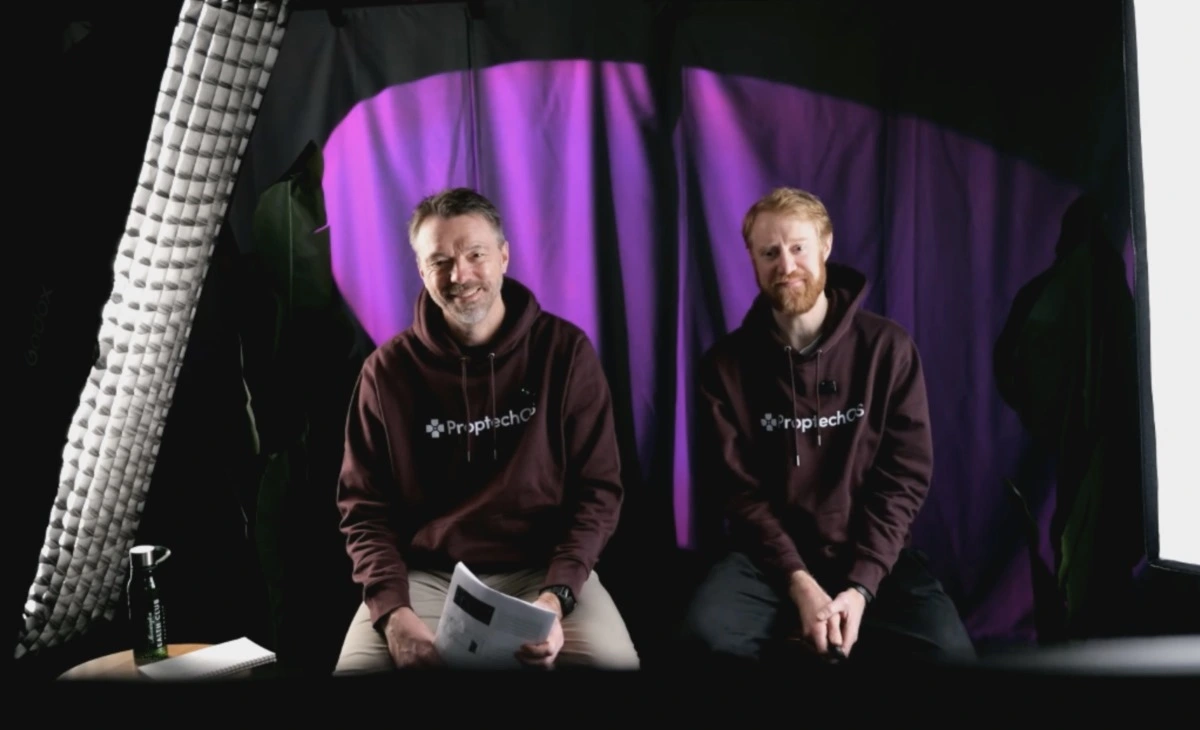
Max Sandberg (former CIO of Gothenburg City), Henrik Ericsson (landlord and revenue strategist), and Johan Bjuregård (co-founder and CEO of Flowpass) walk through the strategic framework, three live case studies, and what it practically takes to move up the value ladder — starting with getting your data on the table.
What this session covers
- Why the market shift is permanent — earn the commute is not a post-pandemic phase; it is a structural change in how organisations think about office space, and the landlords who treat it as temporary are the ones losing tenants
- The experience economy framework — Pine & Gilmore, 1999 progression from commodity square metres to goods, services, experiences, and transformation, and what moving up that ladder requires from your data strategy
- Three data sets that change everything — OT data (sensors, presence, climate, energy), IT data (bookings, room utilisation, AV systems), and intentional data (what tenants and their employees plan to do) — and why combining them is now within reach for any landlord
- How the cost of real-time data has collapsed — what required months of integration work and hundreds of thousands in consultant fees can now be done in 15 minutes, and what that means strategically
- Live dashboard demo — a vacancy risk and tenant health dashboard built during a landlord workshop in Gothenburg, combining OT utilisation data, complaints, lease expiry timelines, and flex space usage
- Three case studies — Scania’s corporate co-working model, Vectura’s life science ecosystem approach, and Antilooppi’s fix-plus-flex offering in Helsinki
- Where to start — why the prerequisite for everything is getting your siloed building data normalised, real-time, and on one platform — and why that is no longer the barrier it used to be
Case studies covered in this session
Scania: corporate co-working as a talent and network engine
Scania faced a problem: employees commuting to Södertälje wanted flexible access to central Stockholm offices, but co-working operators only offered expensive memberships. Scania built their own corporate co-working spaces instead. A 1,000 square metre office, originally furnished and serviced by Vasakronan, now serves 7,000 people sharing 140 desks. Occupancy runs at nearly 100%. The rent multiple is five times a conventional lease — and no one raises an eyebrow, because the cost per person is negligible. The real value: employees build cross-divisional networks, averaging three new internal connections per visit. The conventional KPI of cost per square metre becomes irrelevant when utilisation is this high.
Vectura: shaping ecosystems, not managing properties
Vectura does not describe itself as a property manager. It builds ecosystems within life science, tech, and knowledge-intensive industries. Large anchor tenants share buildings with startups. Events, TED-style talks, cross-tenant activities, and co-working spaces sit alongside traditional leases. Tenants go there because they do not want to miss what is happening — the building becomes a destination. ProptechOS is currently working with Vectura to merge OT and intentional data into a unified dashboard, moving the model from theory into practice.
Antilooppi: fix-plus-flex and the end of the square metre conversation
Antilooppi an office landlord in Helsinki, sells a fixed lease plus access to a flex pool spanning 11 addresses across the city. When a tenant asks for 1,500 square metres, Antilooppi tells them they only need 1,000 — because overflow capacity is built in. The CEO’s position is explicit: they do not manage properties, they service work. The result: tenants take less fixed space, pay more per square metre, use the flex, and stay longer. The overlapping data set across all tenants in a building tells Antilooppi the full picture — who needs more space, who needs less, and when to have that conversation proactively.
The three data sets that unlock revenue management
OT data
Sensor data from the building itself: presence, CO2 levels, humidity, temperature, energy consumption, people flow, access control. This is the data landlords have always owned but rarely surfaced for tenants — or used themselves beyond basic BMS management. Tenants are now actively asking for it. In one example from this session, four tenants in two weeks approached their landlord requesting access to existing CO2 sensors rather than buying their own hardware.
IT data
Booking systems, room utilisation platforms, AV equipment telemetry, Microsoft WorkPlace Analytics. This is the data tenants have but landlords rarely see — yet it tells you which floors are half empty three months before a lease renewal conversation.
Intentional data
The data that FlowPass and similar platforms generate: who plans to come in, when, why, and what they intend to do. When combined with OT and IT data, this enables dynamic pricing, proactive tenant engagement, and the kind of one-to-one relationship that the hospitality industry has operated on for decades. A half-empty floor stops being a surprise at renewal and becomes a conversation six months earlier.
Why now is the right time to act
Vacancy rates in major Nordic markets are at decade highs — above 17% in Helsinki, around 16% in Stockholm, around 13% in central Gothenburg. Transaction volumes collapsed between 2022 and 2023 and are only beginning to recover. The tenants who remain are consolidating into fewer, better spaces and paying more per square metre for quality, flexibility, and experience.
At a landlord workshop in Gothenburg on 28 April, both the generative AI group and the agentic AI group independently converged on the same priority: reducing vacancy and addressing underutilised space. That alignment — across technology approaches and across the largest landlords in the region — says something about where the market is.
The competitive response is not cost-cutting further down the ladder. It is moving up.
What ProptechOS provides in this context
ProptechOS acts as the integration and normalisation layer that makes combining OT, IT, and intentional data possible without months of custom integration work. Different building systems — BMS, IoT sensors, BIM models, access control, energy metering — speak different proprietary languages with local dialects. ProptechOS translates them into a single standardised layer using the RealEstateCore ontology, making data from any system directly comparable across a portfolio.
Once data is normalised and accessible in real time, it can power AI agents, analytics dashboards, and third-party platforms like FlowPass — without re-integrating every time a new use case is added. The prerequisite Henrik describes — getting all your siloed data on one platform in real time — is what ProptechOS exists to deliver.
As Henrik put it in this session: what used to cost hundreds of thousands of crowns and months of consultant work can now be done in 15 minutes. That is the game changer.
See what your building data reveals about your tenants
Book a demo and we can walk through what integrating your OT and IT data would look like across your portfolio — and what it would tell you.
Frequently asked questions
Q: Where should a landlord start if they have no real-time data today?
Start with getting your data on the table. Identify what you have across your buildings — BMS exports, booking systems, energy meters, access logs — and get it normalised onto one platform in real time. You do not need to know the use case before you start. Once the data is accessible, patterns emerge. The shift from a deductive approach (define the problem, then find the data) to an inductive one (get the data, then see what it reveals) is only possible when the data is already live.
Q: Is GDPR a barrier to using tenant and employee data?
Not if you work with consent. The hospitality industry collects detailed personal preferences, loyalty data, and behavioural history with explicit guest consent — because guests understand the value they receive in return. The same model applies here. If tenants and their employees understand that sharing data leads to a better-calibrated space, more relevant services, and a building experience that works for them, consent follows. The narrative matters as much as the legal framework.
Q: Does this model only work for premium or large portfolios?
No. The cases in this session span a global manufacturer running corporate co-working for 7,000 people, a life science ecosystem landlord, and a Helsinki office landlord with 11 addresses. The principle scales in both directions. Start with one building, one data set, one use case — and build from there.
Q: Do tenants actually want to share their IT data with landlords?
Increasingly, yes — particularly when there is a clear value exchange. In this session, Henrik describes tenants proactively approaching landlords to request OT data (CO2 sensors, presence data) in exchange for IT data (bookings, role-based utilisation). The conversation has shifted from landlord push to tenant pull.
Q: What KPIs should replace cost per square metre?
Revenue per occupied desk, tenant retention rate, net promoter score by building, utilisation across flex vs. fixed, and cross-tenant network activity are all more relevant indicators in the experience economy model. The Scania case illustrates this directly: five times the conventional rent multiple with near-100% occupancy makes cost per square metre an irrelevant measure.